
Piloting in Portugal: building civic awareness through play
Portugal mattered more than most. The baseline survey put it at the lowest average scores of the three partner countries, which is why EDUMANSHA took a priority role in piloting, and why the Portuguese sessions were built around one aim: building civic awareness, through the guided activities in the Finance is Civic guide as much as through the board game itself.
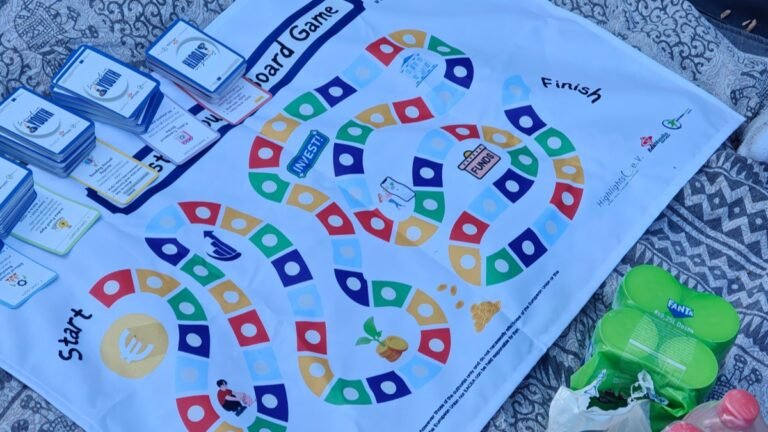
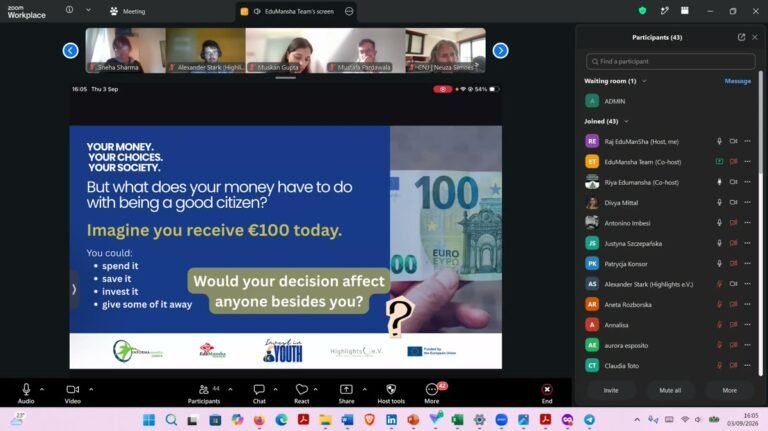
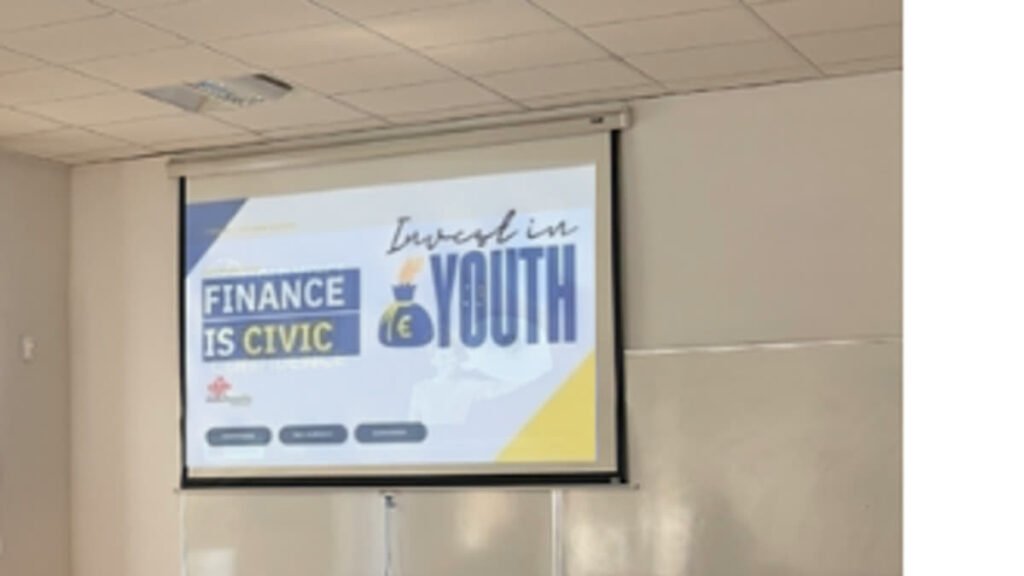
The guide did the framing and the game did the arguing. Facilitators opened with the civic question on screen, why money is never only a private matter, then brought the boards out and let the room work through it. Students weighed up Expense, Opportunity, Civic Duty, Random Event and Skill/Task cards and found out, usually the hard way, that the player holding the most cash was not the one winning.
How the sessions were run
- Many small sessions. Most of the piloting happened in small groups, where there is room for everyone to speak and a facilitator can follow a single argument to the end.
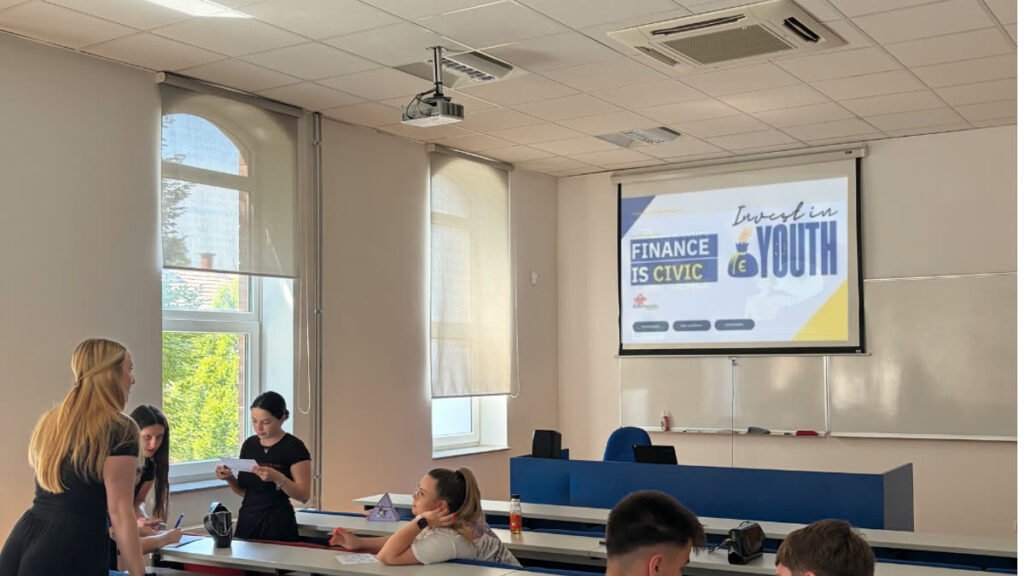
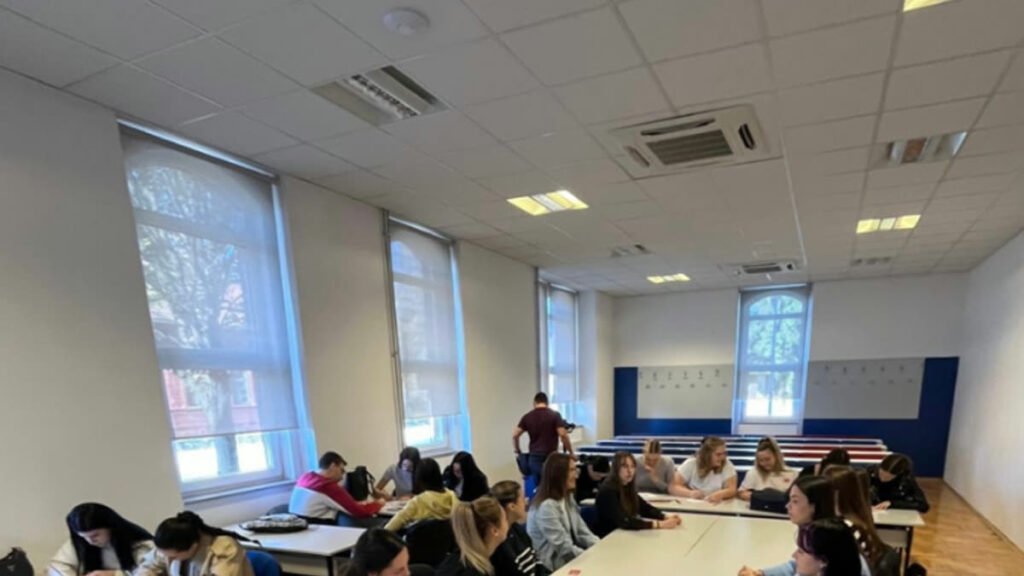
- One large session at the university, the Portuguese multiplier event, delivered together with our training partners, with the board game on display and a full lecture room taking part at once.
What we noticed
The clearest finding was not a score. It was that young people were far more willing to talk openly about money than we expected: about what they earn, what they owe, what they are afraid of, once the conversation was attached to a game rather than to them personally. The board gave them a safe distance, and they used it.
Facilitators reported the same thing from the other side of the table. The mechanic they kept coming back to was the scoring: because Civic Points and Reputation Points count alongside cash, players had to argue about whether doing the right thing was worth what it cost. Several facilitators said that single design choice did more for the civic side of the learning than any slide could.
The numbers from piloting
- Personal finance basics: 82.3% → 88.4% (+6.1 points)
- Civic money awareness: 78.7% → 84.1% (+5.4 points)
- Around 85% could correctly explain why governments collect taxes, up from 67.3% at baseline.
Because Portuguese participants started furthest behind on civic money awareness, the ground gained here carried real weight in the project’s final figures. Feedback from these rooms also fed straight into the refinements discussed at the closing EU Webinar: the card count, the pace at which money runs out, and how visible the consequences of each choice really are.

Funded by the European Union. Views and opinions expressed are however those of the author(s) only and do not necessarily reflect those of the European Union or the European Education and Culture Executive Agency (EACEA). Neither the European Union nor EACEA can be held responsible for them.